The Brunello di Montalcino Riserva Biondi Santi is the ultimate testament to the longevity and typicity of the Greppo estate; some of the historical vintages approach 100 years and more of aging potential, making this wine not only a symbol of excellence but also a true cultural heritage. The most representative vintages include the memorable ones from 1955, 1964, 1975, 1982, 1985, 1988, 1990, and 1995, each with its own unique characteristics that show the climatic trends and the peculiarities of the Montalcino terroir.

Agnes Futa
13 January 2025 – 1st publication 16 December 2024
The Heart
To fully understand a wine, one must start from the Heart of the people who created it; even before that, the idea passes through their minds and, like every good idea, sees its realization projected into the future from where entire generations can benefit. In the case of wine, it works this way: it is a long-term project that encompasses within its noble form various communities. From those environmentally particularly susceptible to change, to those of continuously evolving technological sciences, aimed at helping the future wine without neglecting the tradition that Cantina Biondi Santi has faithfully represented.
The Four Men
Brunello di Montalcino was born towards the end of the 1800s, thanks to the intuitive assessment of a Garibaldi soldier, Ferruccio Biondi Santi, drawing on the agronomic and viticultural experience of his maternal grandfather Clemente Santi. He was the one who bottled the wines from 1888 – bottles that represent the birth of Brunello as it is known today. In the period after the First and Second World Wars until 1970, the figure of Tancredi Biondi Santi emerged; he was the creator of the typicality of Brunello and the pioneer of re-filling old Riservas. After graduating in Agricultural Sciences, Franco Biondi Santi, enologist, took over the management of the Tenuta Greppo and continued with an unparalleled collection of Riserva bottles. He is responsible for the increase in the production of Brunello del Greppo from four hectares, at his father’s death, to the current twenty.

Franco Biondi Santi was a true gentleman. In both his private and professional life, he stood out for his kind and polite manners, respect for others, and the esteem he held for all human beings. He was proactive and full of wisdom. He was as happy as a child when showing the various production phases of his Brunello wines and eager to welcome those thirsty for enological culture; his ability to understand the value of others by empathizing with them was a quality possessed by few. He mastered the subtle art of winemaking and continued the rigorous traditional agronomic and cellar practices to strengthen the uniqueness and improve the quality of Brunello, confident in equating the great centenary reserves of his Brunello.
The Visit – a dose of invaluable culture and knowledge
In June of the sweltering year 2003, I was visiting Greppo, arranged thanks to a dear friend who is a producer from Montalcino. For a young sommelier like I was at the time, being personally received in the cellar by Franco Biondi Santi was a significant recognition – the greatness of the person quickly became the highlight of the visit, and due to his courteous approach, that afternoon of that scorching summer deeply marked my soul. I can imagine how many times F.B.S. must have passionately recounted the story of his Brunello with meticulousness to a broad and varied audience; he surely never bored anyone. The tale of his family intertwined with the vicissitudes of the town of Montalcino, his battle against the construction of a landfill that never materialized, the cultural practices such as green pruning and thinning, and grape thinning. Then, with slow steps through the cellar that smelled of beeswax, the care of the woods was further explored because, for F.B.S., the Slavonian oak barrels of varying age and capacity play a decisive role in the aging process. With glasses in hand and the stoic serenity of someone who had long awaited this moment, the conversation turned to the thornier issues: the future of Brunello and other DOCGs, the role of micro-zones with the technical rather than political choice of land with genuine viticultural vocations, and the consequent territorial control, phytopathological treatments, and the regulation of the use of wood from barrels. He often emphasized that the future depends on the producers and the changes they can make to the regulations, respecting agronomic rules, and the clonal selection of high-quality indigenous grape varieties, aiming to conquer the market for wines produced from those selected varieties. This latter topic was particularly close to his heart; he maintained that thanks to the safeguarding of indigenous grape varieties, one day it would be possible to escape the subservience to the typicity of French wines, as they could rely on their own distinctiveness and remarkable diversity. Many aspects of the lives and people of Montalcino were discussed, a mutual dialogue sparked in part by my unconventional questions, not the routine ones. I still keep the bottle of Brunello Biondi Santi 1998 given to me on that occasion, a certain embarrassment – surprise even at the moment when he asked for my business card, subsequently placing it in the visitors’ book. We met again in Rome later during a glorious vertical tasting; I will forever remember him in a sheepskin coat, hat, and a great smile of a noble-hearted person.

The Prestige and the Fame
Six generations have contributed to the creation of one of Italy’s greatest wines – Brunello di Montalcino Biondi Santi; through different eras and with uniquely human approaches, this wine has achieved worldwide prestige and unparalleled commercial recognition. A wine that defies time; its essence is artfully captured by the great Arturo Mareschalchi, who noted his impressions of a twenty-eight-year-old Brunello from Greppo, presumably from 1897: <<it shows that the qualities of Brunello can resist the decrepitude that often afflicts, especially Tuscan wines, very early>>, thus affirming an intrinsic quality that has made Brunello a symbol of excellence. The same Mario Soldati, in his book “Wine at Wine,” referring to the secret of the Ricolmatura of Brunello done at Greppo in the spring of 1970, wrote: <<I fell to my knees as before a small miracle>>, highlighting the emotion this wine evokes in anyone who tastes it. Furthermore, the enchantment of the sixteen most authoritative wine critics from around the world during the historic vertical tasting on September 28, 1994, represented another significant moment when Franco Biondi Santi decided it was time to showcase to major industry media what Brunello Greppo truly represents, its importance for Montalcino, and the traditional typicity that recurs decade after decade, with historic vintages such as 1888, 1891, 1925, 1945, 1955, 1964, 1968, 1970, 1971, 1975, 1981, 1983, 1985, 1987, and 1988. No less important was the vertical tasting organized by the Tuscany Region at Vinitaly on April 15, 1996, led by oenologist Giacomo Tachis, where the Biondi Santi Riserves from 1955, 1964, 1968, 1970, 1971, 1975, 1983, 1988, and 1990 were tasted, revealing the continuous evolution and extraordinary nature of these labels. But undoubtedly the most prestigious acknowledgment in recent years is that of Wine Spectator, which included Brunello di Montalcino Biondi Santi Riserva 1955 among the best wines produced in the world of the 20th century, the only Italian representative; <<Where would Italy be without the great old wines of Biondi Santi?>> is the title of the article by James Suckling in the prestigious magazine, emphasizing the impact of this wine not only nationally but also internationally. Finally, in December 2000, a bottle of Brunello di Montalcino Biondi Santi from 1891 was auctioned at an auction house in Florence, organized in Rome by Gambero Rosso, for one of the highest prices in the history of wine in Italy: 29.5 million, thus testifying not only to the economic value of Brunello but also to its iconic status among wine enthusiasts and collectors worldwide.
New management
In 2016, EPI, a French luxury holding company of the Descours family, acquired Greppo. This raises a question: will they be able to reproduce the Brunello Biondi Santi with the same characteristics that we have come to love?
End of part one
- Skevofilax. Oltre Kos
 A Kos, Skevofilax è una realtà familiare che unisce tradizione, ricerca e visione. Dai vitigni autoctoni alla Retsina, il racconto di un lavoro concreto, radicato nell’isola e aperto al futuro.
 - Schioppettino. Fuori dai confini del già noto
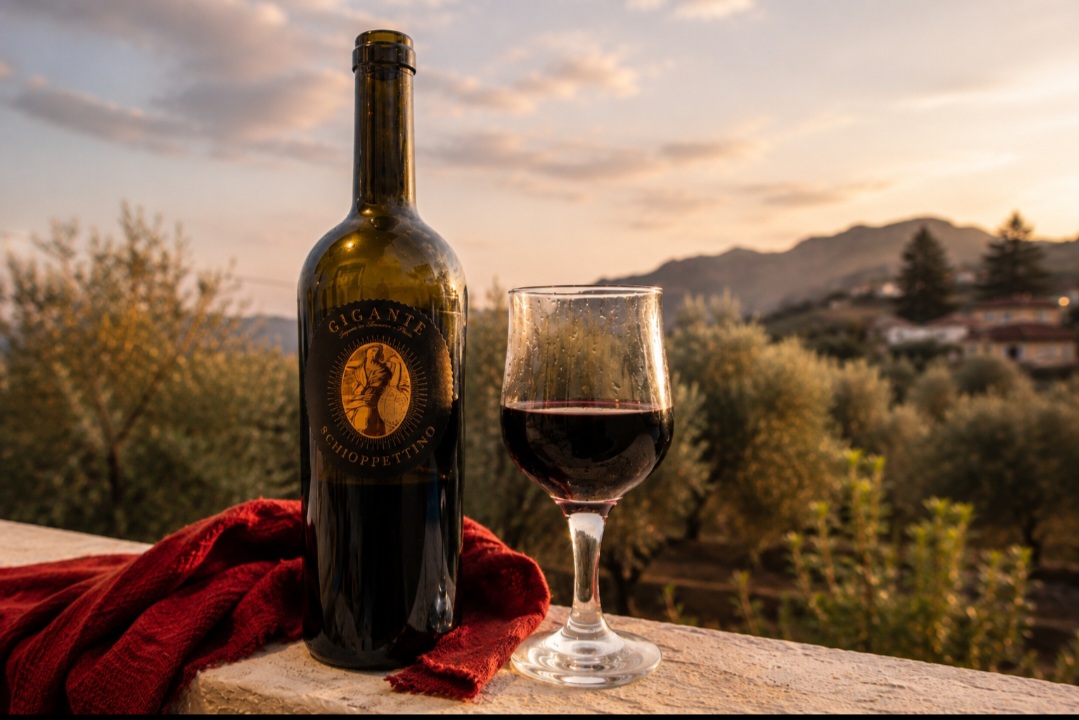
 Uno Schioppettino 2013 attraversa gli anni e il viaggio da Roma al Dodecaneso conservando agilità, grinta e movimento. Un incontro con un vitigno ancora poco conosciuto fuori dal Friuli e una ragione in più per raccontarlo.
 - Brunello 1996. Il valore di essere rimasti se stessi
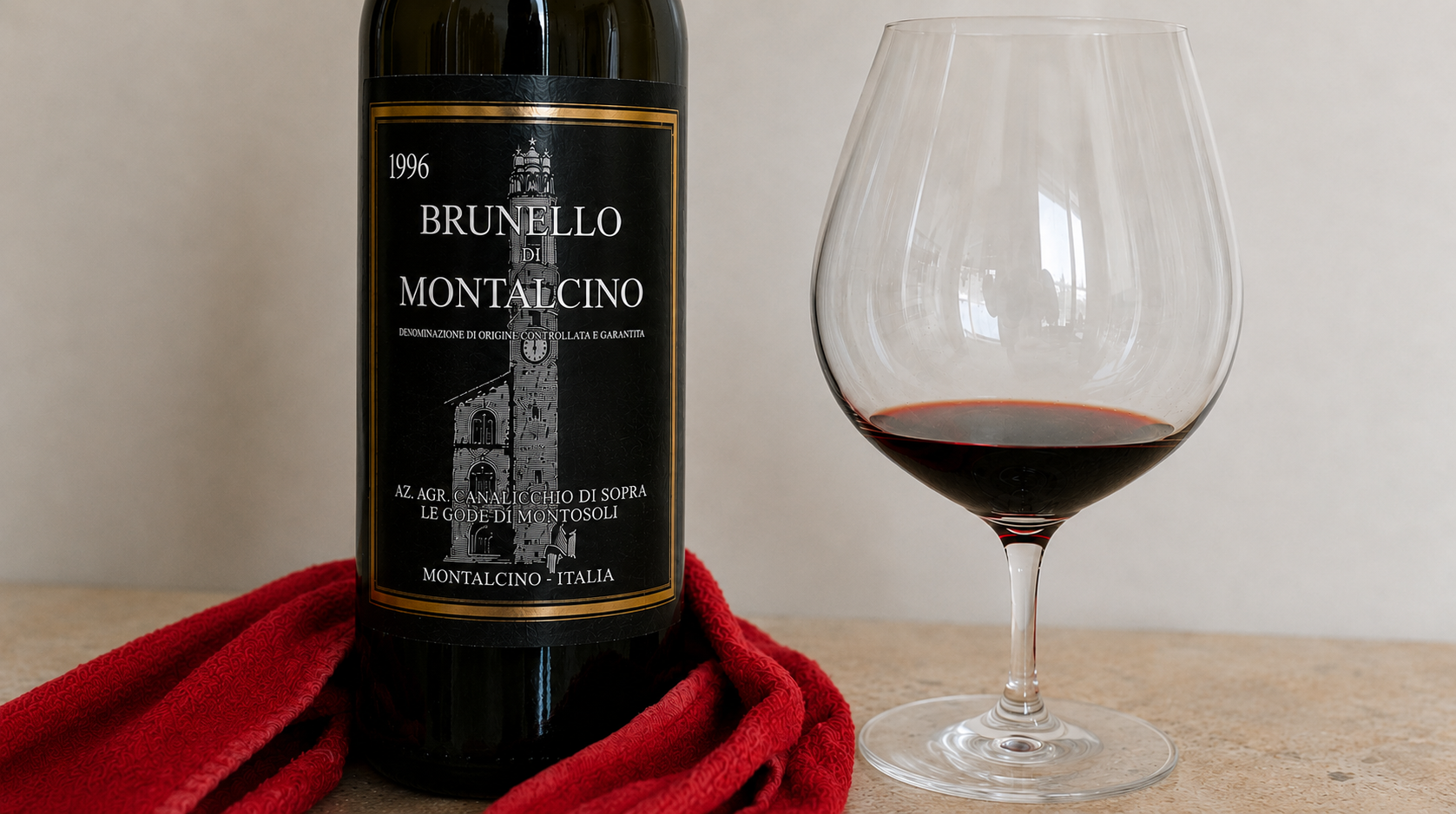
 Brunello 1996. Il valore di essere rimasti se stessi Quando il vino attraversa il tempo senza perdere la propria identità Ci sono vini che, a distanza di molti anni, non sorprendono perché sono sopravvissuti. Sorprendono perché sono rimasti se stessi.Questo Brunello di Montalcino 1996 mi ha restituito esattamente questa sensazione.… Read more: Brunello 1996. Il valore di essere rimasti se stessi
 - I Guardiani di Lava: Perché la Comunità delle Vigne di Santorini rischia di Scomparire
 Le vigne prefillosseriche di Santorini affrontano la prova più dura: resistere alla siccità e al cemento. Dati, fatti e visioni sul campo nel primo reportage di Project Roots.
 - radici
 Radici è un percorso di ricerca tra Mediterraneo e Atlantico dedicato alle relazioni tra vite, ambiente, memoria e continuità culturale.
 - A piede franco, il respiro lungo della vigna cretese.A piede franco, il respiro lungo della vigna cretese Le vigne a piede franco non sono un’eredità del passato, sono una responsabilità del presente. A Creta ci si abitua presto a incontrare vigne a piede franco. È una di quelle abitudini che non smettono mai di stupire. Per chi studia… Read more: A piede franco, il respiro lungo della vigna cretese.
- Oltre la polvere: la voce di chi sa vedere
 Oltre la polvere: la voce di chi sa vedere La parola è lo strumento più potente che possediamo: intercede tra l’idea e l’azione, dà forma ai pensieri e trasforma l’intenzione in realtà. Si dice che la vita sia un viaggio, ma a volte è una sosta obbligata. È il momento… Read more: Oltre la polvere: la voce di chi sa vedere
 - L’eretico di Cormons: Gaspare Buscemi e la resistenza dell’umano nel vino
 L’eretico di Cormons: Gaspare Buscemi e la resistenza dell’umano nel vino A 86 anni Gaspare Buscemi continua a difendere ciò che il vino industriale ha quasi dimenticato: tempo, manualità, pensiero critico e libertà produttiva. A Cormons sopravvive una visione radicale che riguarda tutti noi. In questo articolo → Chi è… Read more: L’eretico di Cormons: Gaspare Buscemi e la resistenza dell’umano nel vino
 - La Francia racconta il vino meglio dell’Italia? No. Lo racconta insieme.
 La Francia racconta il vino meglio dell’Italia? No. Lo racconta insieme. L’Italia è una trama complessa di territori, identità e linguaggi che non si sono mai fusi del tutto. Si dice spesso che la Francia racconti il vino meglio dell’Italia. È vero solo in parte.La Francia non racconta meglio. Racconta… Read more: La Francia racconta il vino meglio dell’Italia? No. Lo racconta insieme.